
A real tunnel car wash system is an automated car wash in which a conveyor moves each car through a long tunnel of fixed cleaning stations — pre-soak, wash, rinse, wax and dry — while several cars are inside the tunnel at the same time. You stay in the car; the car moves, the equipment stays put.
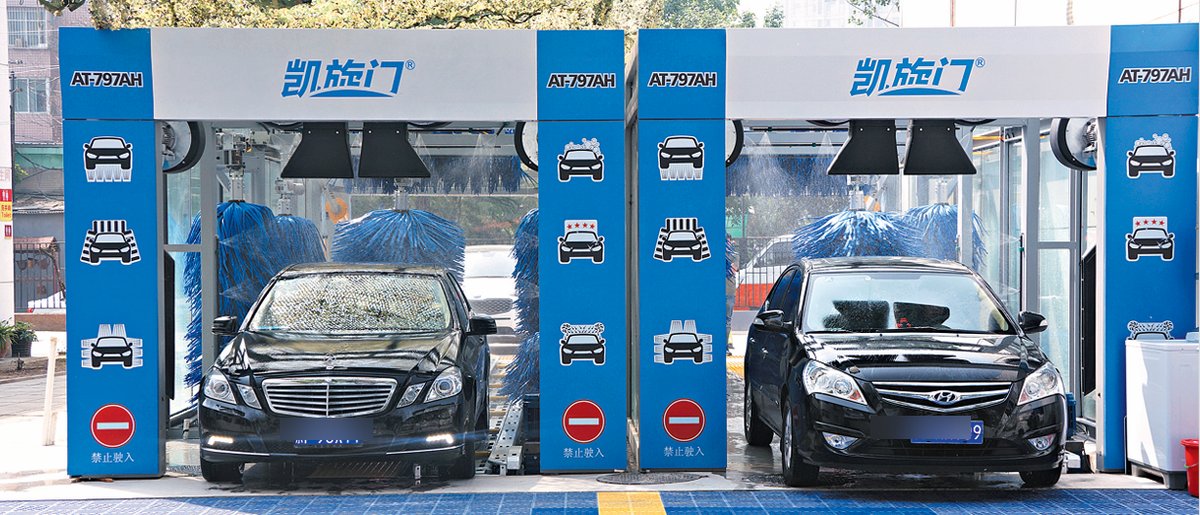
That last sentence is the test. If the car stays parked and the machine moves over it, it is not a tunnel system. It is a rollover (in-bay automatic). Many machines sold as "tunnels" fail this test. A real tunnel has four things: a conveyor (or drive-through), sequential fixed stations along a tunnel, more than one car inside at once, and continuous flow from entry to exit.
Spot it on site — four checks before you believe the label:
- Does the car move through the tunnel — on a conveyor, or driven through by the driver — while the equipment stays fixed? If the car parks and the machine drives over it, it is a rollover, not a tunnel.
- Are the wash units fixed in a line along the tunnel, instead of built into one moving gantry?
- Can you see more than one car inside the tunnel at the same time?
- Does the car enter at one end and leave at the other without stopping? If the car has to stop, wait and reverse out, the flow is not a tunnel flow.
How a real tunnel car wash works
A car enters, the driver puts it in neutral, and the conveyor takes over. The tunnel is one integrated line running at a single speed, so every car inside moves together. What changes from car to car is not the conveyor speed, but which stations switch on as each car passes them.
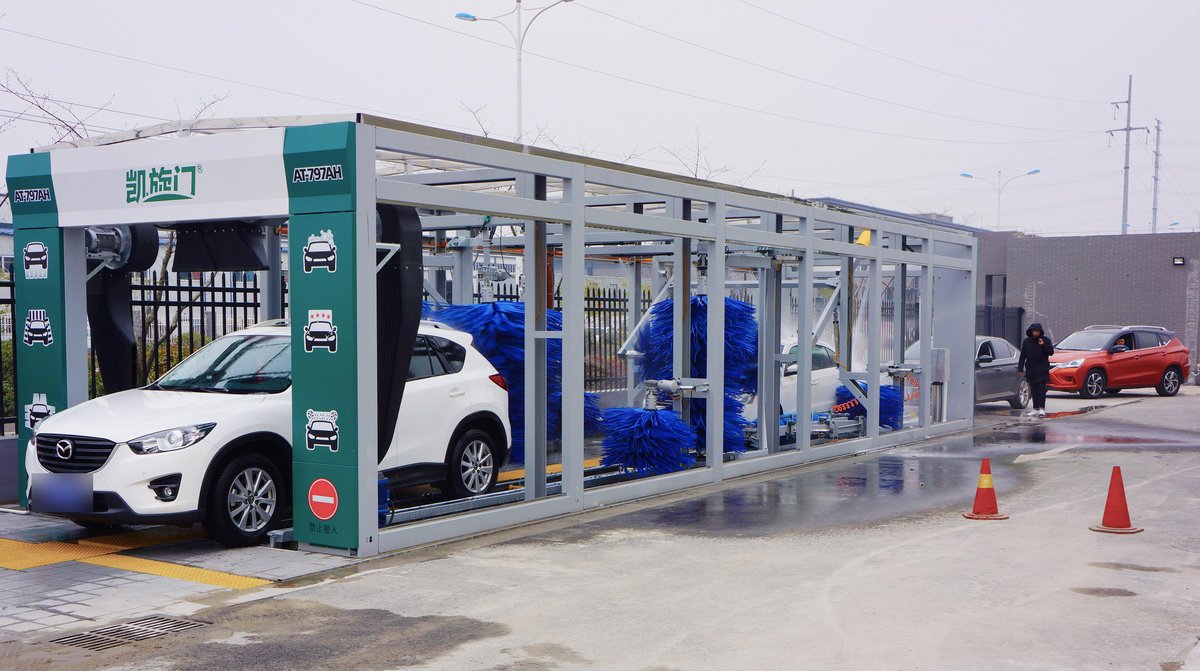
A typical pass runs through five stages:
- Pre-soak. Detergents are sprayed to loosen dirt, road film and insects.
- Wash. Soft-touch foam or cloth applicators scrub the body, with dedicated brushes for wheels and sills. Touchless tunnels skip this step and rely on high-pressure water and stronger chemicals instead.
- Rinse. High-pressure water jets remove soap and loosened dirt.
- Protection. Wax, polish or a ceramic treatment is applied, depending on the wash package.
- Dry. High-volume air dryers blow the car dry before the exit.
A full pass takes about 3–5 minutes per car (figures published by US and Australian wash operators). Because several cars are in the tunnel at once, the line keeps producing one finished car every minute or so at full speed, rather than one car every 3–5 minutes.
Tunnel vs rollover vs in-bay automatic
| Tunnel system | Rollover / in-bay automatic | |
|---|---|---|
| What moves | The car, on a conveyor (or drive-through) | The machine, back and forth over a parked car |
| Cars inside at once | Several | One |
| Throughput | 40–120 cars per hour, depending on tunnel length and configuration (manufacturer specifications) | About 5–15 cars per hour (manufacturer specifications) |
| Footprint | Long: 8–30 m tunnel for most systems, plus 8–10 m entry queue and about 5 m exit (manufacturer specifications) | Compact: one bay, roughly 10–12 m |
| Daily volume | 300–1500 cars a day | 80–120 cars a day |
| Best for | High-traffic sites: gas stations, express wash chains, busy urban sites | Medium-traffic sites: dealer shops, detailing shops, smaller stations |
| Investment | Highest of the three types | Moderate |
The deciding factors are daily traffic, available length and budget — not which machine looks more impressive. A site washing 30 cars a day does not need a tunnel; a site washing 200 does not want a rollover.
How many cars per hour can a tunnel really wash?
It depends on tunnel length and configuration. The figures below are maximums under ideal conditions, not averages:
- A compact 12 m tunnel: about 40–50 cars per hour (manufacturer specifications).
- A mid-size 18 m tunnel: about 60–70 cars per hour (manufacturer specifications).
- A full 30 m tunnel: about 100–120 cars per hour (manufacturer specifications).
Real output is lower whenever cars arrive unevenly, entry gaps stretch out, or the site runs a longer wash program. Ask any supplier for throughput at your traffic pattern, not just the headline figure.
Are tunnel car washes safe for paint?
Modern tunnel systems are designed to be safe for paint, but the answer depends on the equipment and how it is maintained:
- Brush material matters. Modern soft-touch systems use foam or cloth, not stiff bristles. Closed-cell foam is designed not to trap dirt the way older cloth brushes could, so grit is less likely to be dragged across the paint.
- Calibration matters. Ultrasonic vehicle profiling lets the machine recognise vehicle shape and adjust brush pressure; top-brush interrupt functions keep the top brush out of a pickup bed where it could hit debris.
- Chemistry matters. Touchless tunnels use no brushes at all, but compensate with stronger detergents and more water, power and chemicals — about twice the water and chemicals and three times the electricity of a friction wash, according to a trade estimate. Consumer Reports and AAA both describe touchless as the gentler automated option, with the trade-off that it cleans heavy grime less well.
- The honest limit. No published test we could find runs a friction wash and a touchless wash on the same paint and measures the result. "Touchless is safer" rests on reasoning and expert advice, not on a head-to-head measurement. Any supplier claiming proof should be asked to show it.
What does a tunnel car wash system cost?
For overseas buyers, where washing is a paid service, industry benchmarks are:
- Equipment: roughly $50,000–$250,000+ for a tunnel system, depending on length, configuration and features (industry benchmarks).
- Total project: roughly $500,000–$1,500,000+ for a compact tunnel including site preparation, construction, utilities and signage (industry benchmarks).
- Payback: industry data suggests a typical payback of 3–5 years for a tunnel, depending on volume and local conditions (industry benchmarks).
These are benchmarks, not a quotation. Actual cost depends on tunnel length, configuration, site works and freight; actual payback depends on location, traffic, wash price and how well fuel traffic converts to wash traffic. A&T does not promise a payback period — it is calculated from the buyer's site data. Prices vary by model and configuration; ask for a quotation against your site.
What to check before buying a tunnel system
- Throughput against your real traffic. Count cars at your site at peak hours before choosing tunnel length.
- Footprint against your real site. Measure the full line — tunnel plus entry queue plus exit — not just the machine.
- Water use and recycling. A tunnel uses far less water per car than washing at home with a hose; a water recycling system (such as a wash water recycling system) cuts fresh-water use further and matters more every year as water rules tighten.
- Brush and dryer quality. Ask what the wash media is made of, how it is cleaned, and how the dryer is controlled.
- Service and spares. A tunnel earns nothing while it is down. Check response time, spare-parts stock and whether the supplier teaches your team to handle common repairs.
- Warranty. A&T tunnel systems carry a 1-year warranty overseas, with long-term technical support and spare parts in stock.
FAQ
What is a tunnel car wash system?
An automated car wash in which a conveyor moves cars through a long tunnel of fixed cleaning stations — pre-soak, wash, rinse, wax and dry — with several cars inside at the same time.
How is a tunnel different from a rollover car wash?
In a tunnel the car moves past fixed equipment on a conveyor; in a rollover the car stays parked and the machine moves over it. Tunnels wash many cars at once and handle far higher volume; rollovers are compact and suit medium traffic.
How long does a tunnel car wash take?
About 3–5 minutes per car from entry to exit. Because several cars are in the tunnel at once, a busy tunnel finishes one car roughly every minute at full speed.
How many cars can a tunnel wash per hour?
About 40–50 per hour for a compact 12 m tunnel, 60–70 for a mid-size 18 m tunnel, and up to 100–120 for a 30 m tunnel, under ideal conditions. Real output depends on traffic flow and wash program.
Are tunnel car washes safe for paint?
Modern foam and cloth systems, properly calibrated and maintained, are designed not to damage paint. Touchless tunnels avoid contact entirely but use stronger chemicals. No published head-to-head test measures both on the same paint.
How much space does a tunnel car wash need?
A 12 m tunnel needs about 25 m of total length including entry queue and exit; an 18 m tunnel about 33 m; a 30 m tunnel 45–50 m (manufacturer specifications). Measure the full line before deciding.
What does a tunnel car wash system cost?
Equipment roughly $50,000–$250,000+; total project roughly $500,000–$1,500,000+ including site works (industry benchmarks). Exact price depends on model and configuration.
About A&T Car Wash Systems
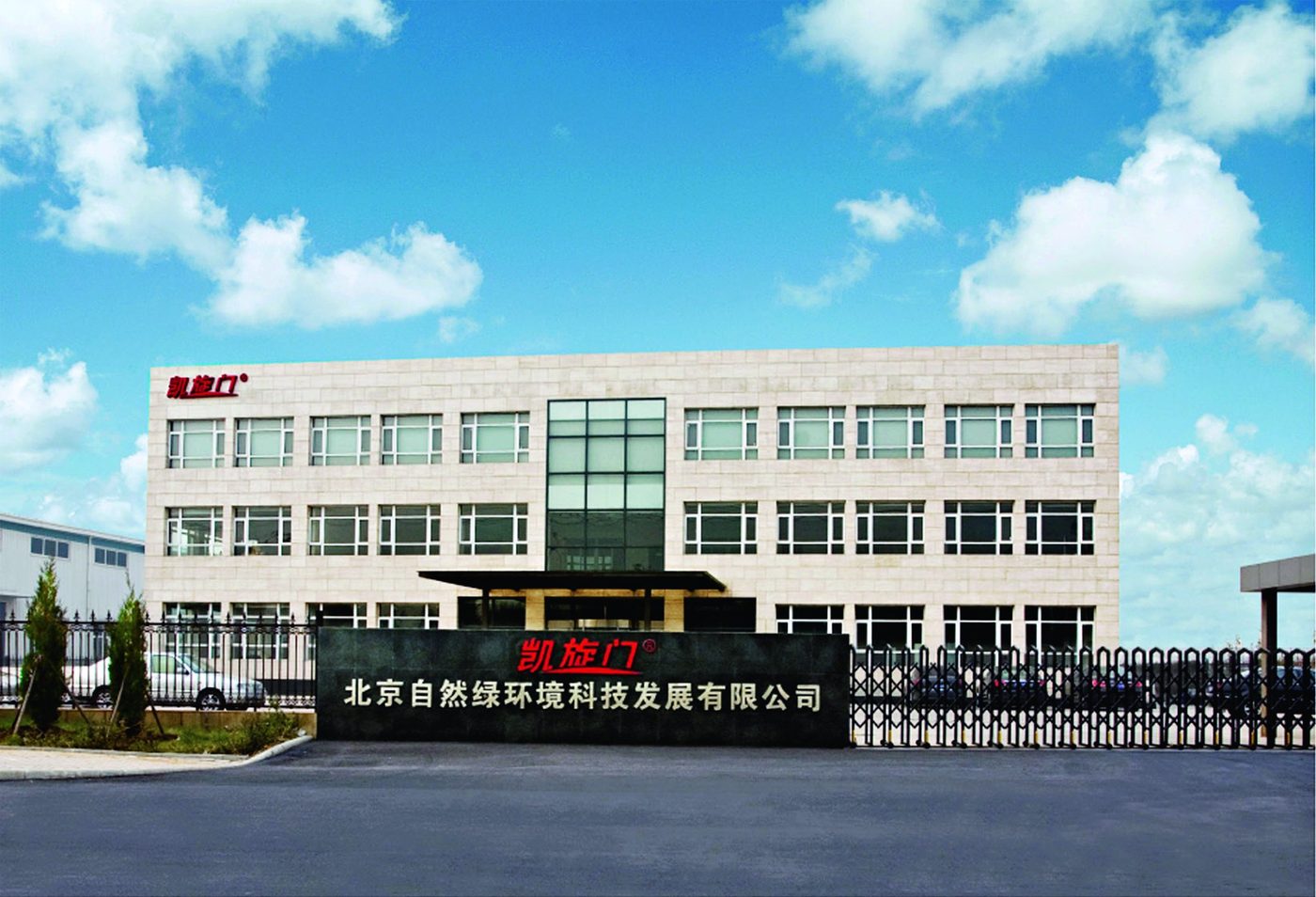
A&T Car Wash Systems is the international brand of Kaixuanmen (凯旋门), a car wash equipment manufacturer in Beijing, China, since 2000. It builds tunnel, rollover and touchless car wash systems for gas stations and wash operators worldwide.
Tunnel systems → · Rollover systems → · Touchless systems → · Wash water recycling → · Request Quote →