
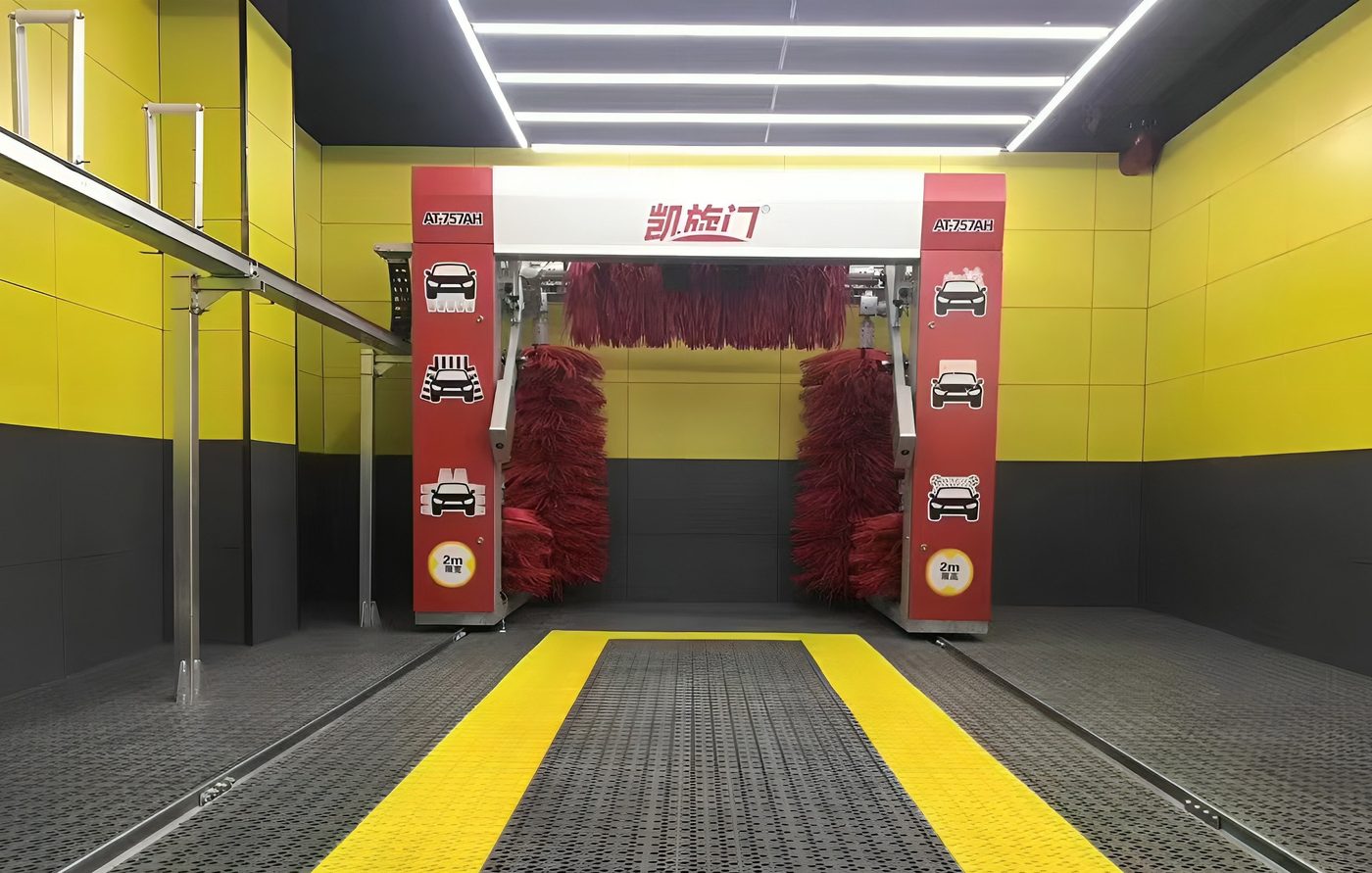
In an earlier article we shared information about EVA brush material for automatic car wash machines, and only briefly mentioned another class of brush material — the cloth brush, also called a textile brush. This material is used very widely in Europe and America, especially in some European countries. In this article, let us introduce it properly.
Felt cloth brushes
This is a wash material much like felt, and it can be used for washing or for drying. It is made by a special process: a layer of specially treated wool or fibre is bonded onto a base material. The felt surface has large pores and absorbs some water. In washing, a brush made of this felt material soaks up a lot of water and stays wet. As the brush turns, its added weight increases the friction against the paint, and under that greater friction, dirt is peeled off the paint surface.
The advantage of this material on a wash brush is that it is heavy, cleans well, and polishes the paint somewhat as it washes. Compared with other brush materials, cars washed with it look brighter — which is why European customers like it so much. But this felt material demands a higher standard of pre-wash, which is why you will see most European car wash machines designed with a pre-wash station, where one or two staff rinse the car with high-pressure guns before it enters the machine. It also asks a lot of the wash chemicals — how much is used, and how good they are. Felt gets heavy when it absorbs water, so to protect the paint, you need to use more lubricant, and the lubricant must foam well enough to wrap the grit left on the paint. Otherwise that grit gets into the pores of the felt surface and damages the paint.
This felt material can also be used in the final drying stage. The felt used for drying is usually softer, and its wool layer is thicker. A brush dryer made of it polishes paint that has been sprayed with a drying agent or liquid wax very well — compared with a chamois brush dryer, the paint looks brighter after washing.
Microfiber cloth brushes
The microfiber we mean here is ultrafine synthetic fibre. Its most familiar use is the towel you see used to dry a car by hand.
In China, microfiber is defined as fibre with a single-filament fineness of less than 0.44 dtex. Because the fibres are so fine, the cloth has a larger surface area, and so forms many more tiny capillary pores in a smaller space. That gives this material notably strong water absorption and cleaning ability.
For wash brushes on automatic car wash machines, short-pile microfiber brushes are usually chosen. This material absorbs a certain amount of wash water and detergent — or lubricant. Compared with felt, at the same level of water absorption, microfiber is softer, fits the paint surface better, and cleans better.
Microfiber cloth brushes are also widely used in the drying stage of automatic car wash machines, thanks to the material’s very strong water absorption. Drying microfiber brushes usually use longer-pile microfiber, which absorbs water even better.
Cloth and EVA together: the best of both
Compared with the EVA brushes now most widely used in the car wash industry, the cloth brush — the textile brush — has clear advantages, but also drawbacks that cannot be avoided. Cloth brushes clean better, but they use more water and more wash chemicals, so running costs are higher than with EVA brushes.
To deal with this, some European makers have creatively developed a combined brush material — cloth brush and EVA used together. This design takes the elasticity, toughness and durability of EVA, and combines it with the cleanliness and water absorption of the textile brush.
In my view, it is the healthy development of the car wash industry in Europe and America that keeps new materials and new designs coming. Consumers’ high demands push wash-site investors to keep looking for better equipment and materials, and the investors’ needs push machine makers to work harder to meet what buyers want. This virtuous cycle moves the whole car wash industry — and the industries around it — forward together.